The marketing landscape is increasingly dominated by fleeting digital interactions and ad-blockers, making it harder than ever for brands to capture and retain consumer attention online. However, in the physical world, out-of-home (OOH) marketing remains the ultimate un-skippable ad format. The landscape of outdoor advertising in India has transformed dramatically by 2026, evolving from static roadside banners into a highly dynamic, data-driven, and interactive channel that directly fuels rapid business growth.
For companies looking to scale this year, relying on outdated “spray and pray” methods will not yield the desired return on investment. Success requires a hybrid approach that marries the massive, unavoidable reach of traditional physical media with the targeted precision of modern technology. Whether you are a local retailer aiming to increase daily footfall or a national brand launching a new product line, here are the top 10 outdoor advertising strategies you need to implement for maximum business growth in 2026.
1. Maximize Reach with Transit Media Advertising
The modern Indian consumer is highly mobile, and your advertising should be, too. Transit media advertising has emerged as one of the most powerful baseline strategies for 2026, primarily because it places your brand directly in the daily line of sight of millions of active commuters.
Instead of waiting for customers to walk past a static board, transit media takes your message into residential neighborhoods, commercial hubs, and traffic bottlenecks. This strategy capitalizes on the “dwell time” of commuters stuck in peak-hour traffic or waiting at transit stations, turning idle moments into powerful brand interactions. By mapping out high-traffic routes and aligning them with your target demographics’ daily commute, transit media ensures sustained, high-frequency exposure that builds deep, subconscious brand recall over time.
2. Leverage High-Frequency Bus Branding
Within the vast transit ecosystem, buses offer the largest moving canvas available to advertisers. Utilizing professional bus branding services allows you to transform entire vehicles into rolling billboards that command authority on city streets and highways alike.
In 2026, successful bus branding is not just about slapping a logo on a vehicle panel. Strategic businesses are using full-wrap graphics with bold, high-contrast visuals and minimal text to deliver instant messaging to both pedestrians and motorists. Because public and private buses run on fixed, predictable routes, brands can hyper-target specific zones of a city with incredible accuracy. If you are launching a B2B SaaS product, wrapping buses that specifically service IT parks and corporate business districts ensures your marketing budget is spent reaching exactly the right demographic.
3. Hyper-Local Targeting via Auto-Rickshaws
While buses dominate the main arterial roads and highways, they cannot penetrate the dense, narrow streets of residential neighborhoods and busy local markets. This is where auto-rickshaw branding steps in as the ultimate last-mile visibility tool.
By partnering with a specialized auto advertising agency in India, businesses can achieve incredible hyper-local penetration at a fraction of the cost of large-format media. Auto-rickshaws act as community-level ambassadors for your brand. In 2026, savvy marketers are using fleet-based auto advertising to flood specific postal codes ahead of store launches, seasonal sales, or regional political campaigns. It is a volume-based strategy: having your brand on 500 autos circulating within a tight 10-kilometer radius creates an inescapable, dominant local presence that drives immediate community-level action.
4. Dominate Cityscapes with Traditional Hoardings
Despite the massive rise of digital screens, the sheer imposing scale of a static billboard cannot be ignored or replicated. Working closely with a premium hoarding advertising agency to secure prime real estate at major intersections, airport approach roads, and highway toll plazas remains a cornerstone of enterprise-level brand growth.
The strategy for hoardings in 2026 is all about establishing “Brand Stature.” Large-format static boards convey authority, permanence, stability, and trust. Because they are not rotating through different advertisers every ten seconds, they offer a 100% share of voice in that specific location. To maximize this strategy, keep the creative exceptionally minimal. Use a striking hero image, a punchy seven-word headline, and a clear call-to-action to ensure the core message is absorbed instantly by drivers passing at high speeds.
5. Partner with Specialized Regional Experts
India is not a monolith; consumer behavior, local dialects, and municipal advertising regulations change drastically from city to city, and even from district to district. A campaign that works perfectly in South Mumbai might fail completely in the capital due to cultural nuances or strict placement restrictions.
To achieve actual growth, localization is non-negotiable. Collaborating directly with an experienced outdoor advertising agency in Delhi NCR, for example, gives you immediate access to crucial local intelligence. Regional agencies understand the optimal placement zones, negotiate significantly better rates with local vendors, and know exactly how to navigate the complex logistics and legalities of localized media placement. This regional expertise ensures your campaigns resonate culturally while remaining strictly compliant with municipal laws.
6. Optimize DOOH Budgets and ROI
Digital Out-of-Home (DOOH) is the fastest-growing segment of the outdoor industry. According to the authoritative Pitch Madison Advertising Report 2026, India’s OOH advertising sector emerged as the ultimate “traditional survivor,” growing by 4% year-on-year to reach ₹4,835 crore, driven heavily by the rapid expansion of DOOH and premium urban sites.
However, the premium nature of digital screens can quickly consume a marketing budget if not managed carefully. To keep your digital billboard advertising in cost-effective parameters, you must transition to programmatic buying. Programmatic DOOH allows you to purchase screen time based on specific data triggers rather than paying for a 24/7 static slot. For instance, a coffee brand can choose to only display ads on digital billboards when the local temperature drops below 15°C, or a restaurant can trigger ads exclusively during the evening rush hour. This conditional targeting ensures you are only paying for impressions when your audience is highly likely to convert, maximizing the efficiency of your ad spend.
7. Capture Shoppers with In-Store Media
The consumer journey often ends at the point of sale, making the physical retail environment a critical, high-converting advertising zone. With the rapid expansion of retail media advertising, India is seeing a massive shift toward brands engaging consumers right before they make a final purchasing decision.
Retail media includes digital screens at checkout aisles, mall atrium displays, pillar wraps in shopping centers, and interactive smart kiosks. This strategy captures consumers when they are already in a buying mindset and possess high purchasing intent. By placing your messaging mere steps away from the cash register or the specific product aisle, retail media effectively bridges the gap between top-of-funnel brand awareness and immediate bottom-of-funnel sales conversion.
8. Utilize Cost-Effective Tangible Branding
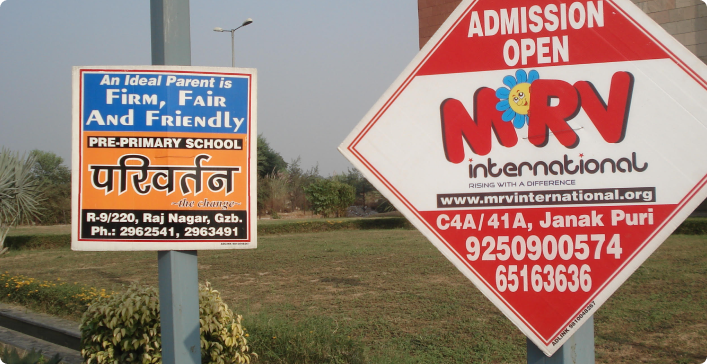
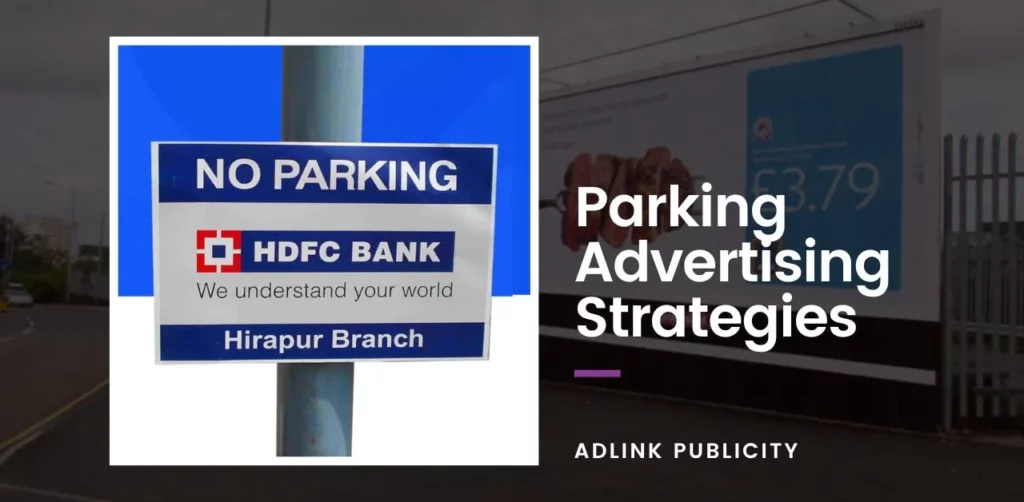
While massive billboards and digital screens generate market buzz, the true backbone of sustained, high-volume local visibility often lies in tangible, affordable physical materials. Products like Sunpack sheets, tin plates, stepney covers, and no-parking boards are incredibly effective for blanketing a local area without breaking the bank.
At Adlink Publicity, we recently manufactured and deployed over 10,000 Sunpack sheets for a retail client in Delhi NCR, resulting in a 40% increase in local store footfall within two weeks. This proves the ongoing power of physical, high-volume materials. Because these items are inexpensive to manufacture directly from the source, they provide exceptional ROI for regional businesses, real estate developers, and local service providers who need to dominate a specific neighborhood visually.
9. Integrate Tech: QR Codes and Geo-Fencing
Outdoor advertising is no longer a strictly offline medium. The most successful strategies in 2026 actively bridge the gap between the physical billboard on the street and the consumer’s smartphone in their pocket.
Integrating large, scannable QR codes into transit media, bus shelters, or retail displays provides an immediate mechanism for consumers to interact with your brand, turning a passive viewing experience into active lead generation. Furthermore, pairing your OOH placements with mobile geo-fencing allows you to retarget consumers digitally. If a commuter walks past your hoarding, geo-fencing technology can capture that location data and serve a follow-up digital ad to their social media feed later that same day, creating a highly effective, multi-touch point marketing funnel.
10. Focus on Sustainable and Eco-Friendly Executions
Consumer values have fundamentally shifted, and corporate social responsibility is a major factor in brand loyalty in 2026. Simultaneously, municipalities across India are cracking down on environmental waste and plastic usage in the advertising sector. Embracing sustainability in your OOH campaigns is now a vital growth strategy, not just a PR move.
Opt for agency partners that utilize recyclable flex materials, eco-friendly inks, and solar-powered LED illuminations for their displays. Highlighting your brand’s commitment to green advertising resonates deeply with modern, eco-conscious consumers and protects your company from the negative backlash associated with environmental waste. Sustainable advertising builds a powerful brand narrative of responsibility and forward-thinking leadership.
Conclusion
Securing business growth in 2026 requires moving beyond the outdated mindset that outdoor advertising is just “putting a picture on a wall.” It is a highly dynamic, strategic ecosystem that demands a calculated mix of broad awareness and hyper-local targeting.
By integrating high-impact static hoardings with the flexibility of programmatic digital screens, dominating the streets with comprehensive transit and auto campaigns, and bridging the offline-to-online gap with interactive technology, your brand can secure unparalleled visibility. Remember, the key to success in any crowded market is un-skippable presence. In a world of digital ad-fatigue, a well-placed, highly relevant outdoor campaign remains the ultimate tool to captivate your audience, drive immediate action, and secure long-term business growth.
FAQs:
For localized impact, auto-rickshaw branding and tangible physical materials offer the highest ROI. Because auto-rickshaws penetrate dense residential neighborhoods and narrow streets, they act as mobile, hyper-local billboards. Additionally, utilizing inexpensive physical materials like Sunpack sheets or no-parking boards allows businesses to blanket a tight 10-kilometer radius economically. For example, deploying high-volume Sunpack sheets can increase local store footfall by up to 40% in just a few weeks.
Modern outdoor advertising tracks ROI by bridging the offline-to-online gap using integrated technology:
-
QR Codes: Embedding large, scannable QR codes on transit media or retail displays turns passive viewing into active lead generation.
-
Mobile Geo-Fencing: By pairing physical hoardings with geo-fencing, brands can capture the location data of passing commuters and retarget them with digital ads on their social media feeds later that day.
Programmatic DOOH allows advertisers to purchase digital billboard screen time based on specific data triggers, rather than paying for expensive 24/7 static slots. This ensures ad budgets are spent efficiently. Examples of programmatic triggers include:
-
Weather conditions: A coffee brand displaying ads only when the temperature drops below 15°C.
-
Time of day: A restaurant triggering dynamic ads exclusively during evening rush hours. This conditional targeting guarantees you only pay for impressions when audience conversion intent is highest.
Transit media such as bus branding and train advertising is crucial because it places your brand in the daily line of sight of millions of active commuters. Key benefits include:
-
Capitalizing on Dwell Time: It engages consumers who are stuck in traffic or waiting at stations.
-
Hyper-Targeting: Because buses run on fixed routes, B2B and B2C brands can target specific city zones, like IT parks or commercial districts.
-
Subconscious Recall: High-frequency exposure along daily commute routes builds deep, sustained brand recognition.
The outdoor advertising landscape in 2026 is driven by the integration of technology and localized targeting. The top trends include:
-
Retail Media Expansion: Capturing shoppers with in-store digital kiosks right before the point of sale.
-
Eco-Friendly Executions: Utilizing recyclable flex materials, eco-friendly inks, and solar-powered LEDs to align with modern corporate social responsibility.
-
Programmatic DOOH: The fastest-growing segment of OOH, allowing data-triggered ad placements.
-
Hyper-Localization: Partnering with regional experts to navigate local dialects, municipal laws, and optimal placement zones.